Online Guide for Journalist: “Fake News and Disinformation”
The tools and techniques collected from the above training were compiled in a guide and published on “GNMI” website. This handbook is designed to help journalists at a time when harmful health advice, hate speech and wild conspiracy theories are rising, and blatant lies are being spread during Covid-19. The guidelines included the selection of the news stories, date collection from credible sites, selection of the appropriate words or terminologies and inclusion of the visual to make the new stories appealing and catchy.
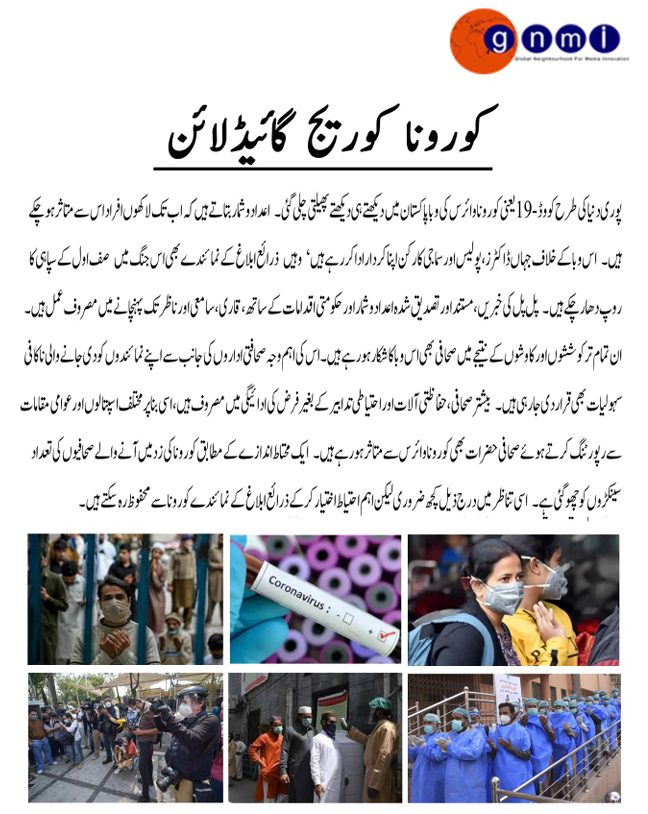
Digital Interviews
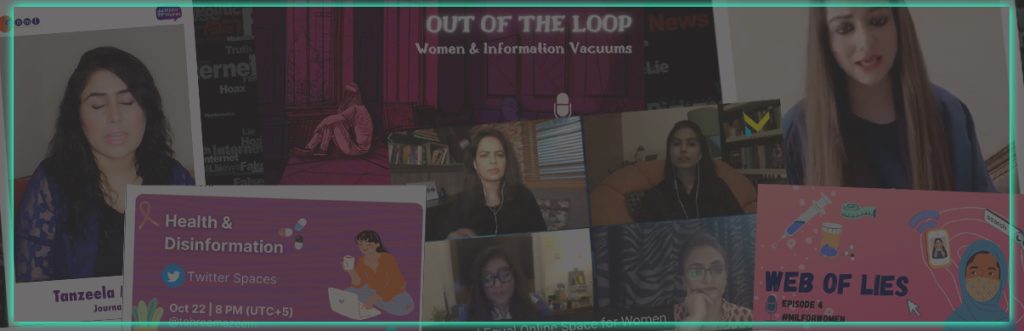
Under this program, three digital interviews were conducted with female journalists who are advising on how to fight misinformation or disinformation.
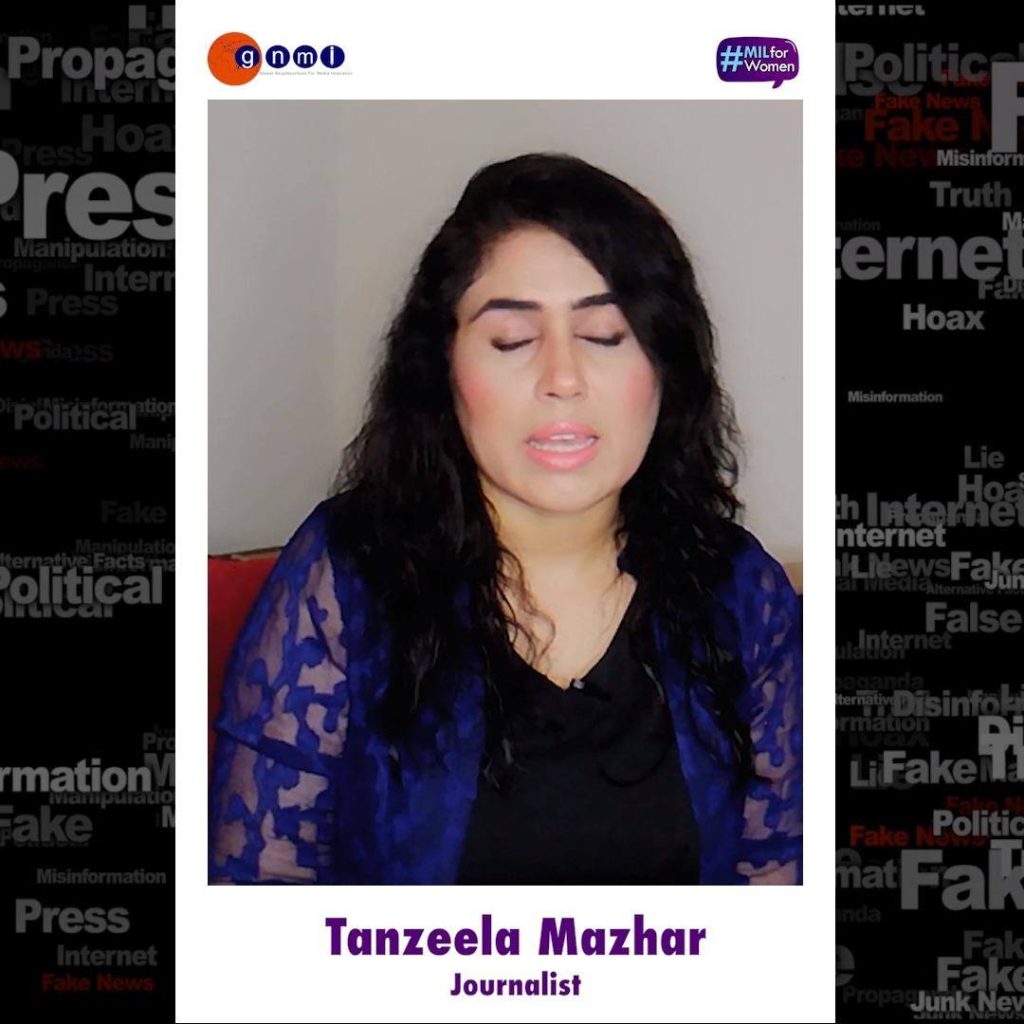
Tanzeela Mazhar, Journalist and GTV Program host, said in her interview that governments need to develop credible websites where people get the data easily and media need to raise awareness about those sites to counter the miss/disinformation related to covid 19 pandemic news. When people or journalists have access to accurate information, then it will keep people well informed about the COVID-19 Pandemic.
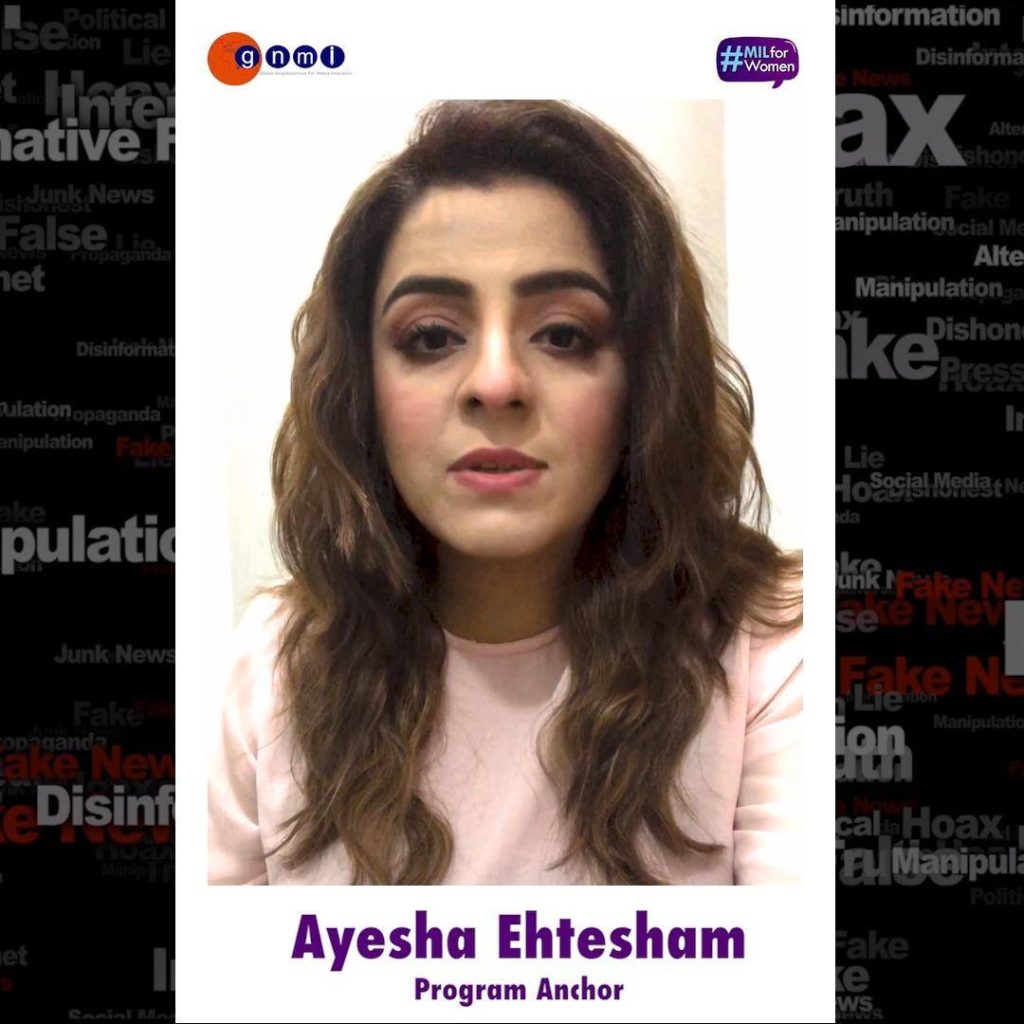
Ayesha Ehtesham, a journalist shared her experiences and the hurdles she faced while covering events during the Covid-19 pandemic. She highlighted the dual nature of social media, noting that while it offers numerous benefits, it also has drawbacks, particularly in the rapid spread of misinformation. Ayesha pointed out that misinformation related to Covid-19 can go viral within two to three hours, greatly influencing public perceptions.
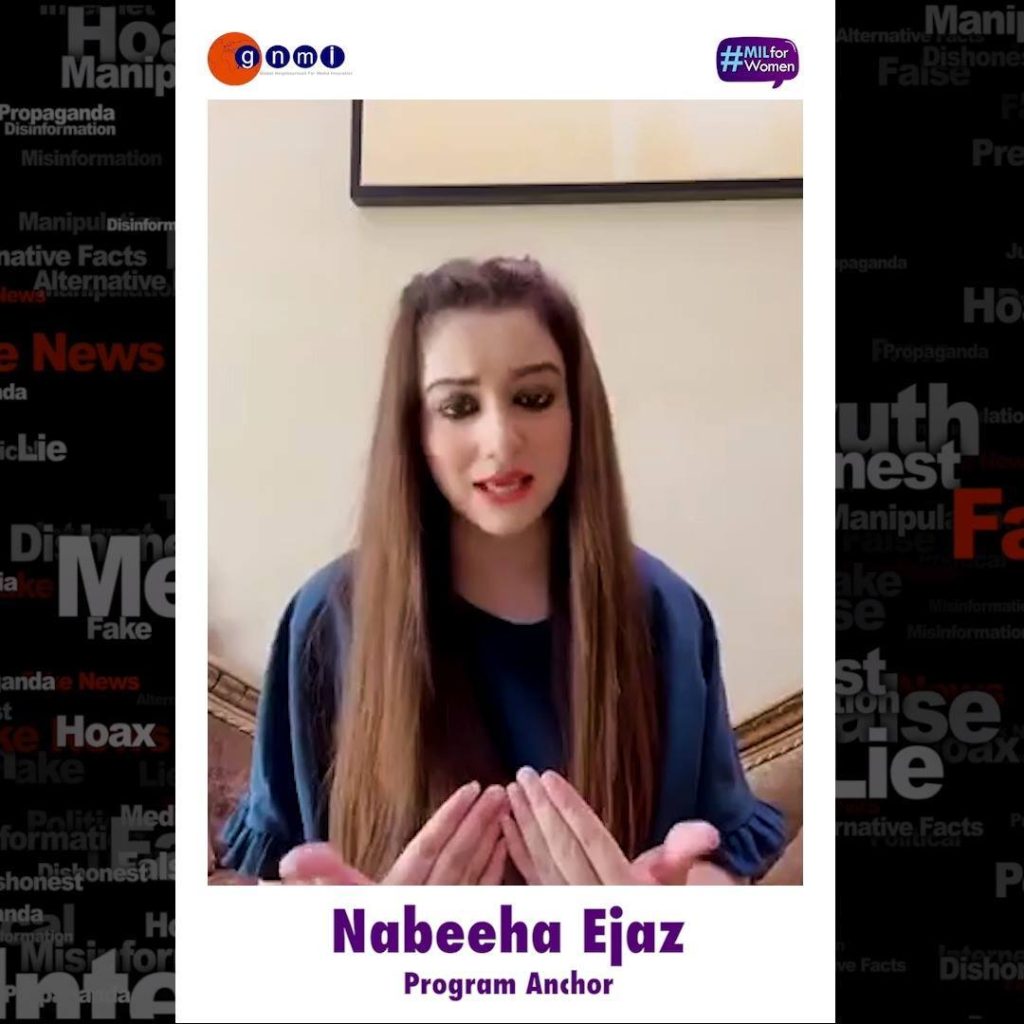
Nabeeha Ejaz, Neo TV Program host, talked about the spread of misinformation and disinformation related to the COVID-19 pandemic. She also gave the tips to avoid disinformation and asked her audience/social media activists/educationalists to come forward and stop the spread of misinformation and fake news.
Webinar
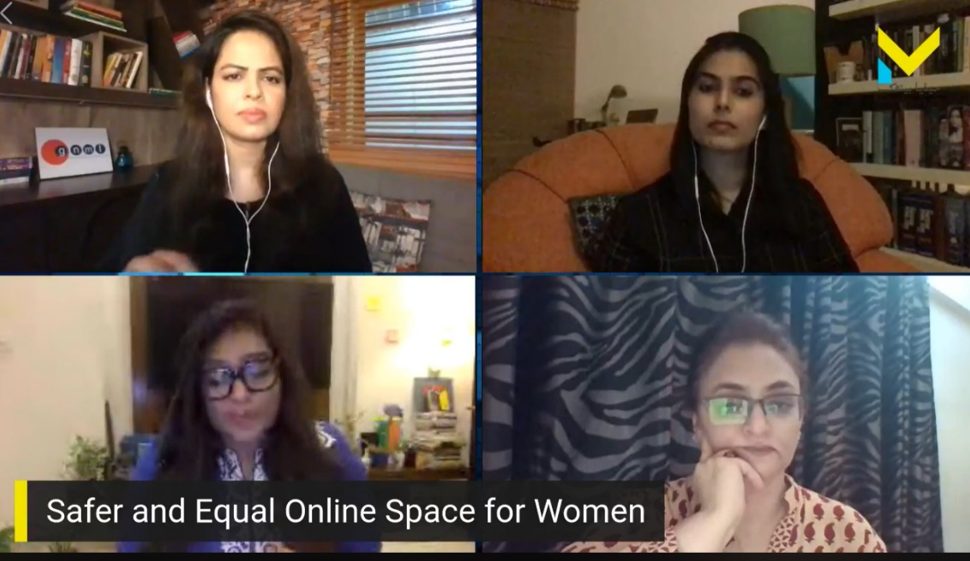
“Safer and Equal Online Space for Women”.
Policymaking for Internet Rights and Media Literacy, and the Role of Women
The webinar was conducted with four female participants, Nighat Dad – Founder, Digital Rights Foundation, Farieha Aziz, co-founder of Bolo Bhi, Lubna Jerar Naqvi, member of the Executive Committee of the Karachi Union of Journalists and Najia Ashar founder and president of Global Neighbourhood for Media Innovation (GNMI). The webinar began with a discussion on the numerous challenges women journalists face online, including cyberbullying, threats, and blackmailing. These issues have become pervasive in Pakistan, with many young women receiving unsolicited, slanderous, and negative messages on their social media accounts as they carry out their journalistic duties.
The panelists emphasized the need for a fair internet policymaking process. For women, navigating the online world brings unique threats and challenges. Despite the alarming statistics, the response should not be to limit women’s online voices and freedom; protection should not equate to exclusion. The webinar also explored how promoting independent, critical, pluralistic, and professional online journalism can counter disinformation by providing sound, fact-based information. The panelists highlighted the importance of supporting female journalists and ensuring their safety while upholding the principles of free expression and accurate reporting.
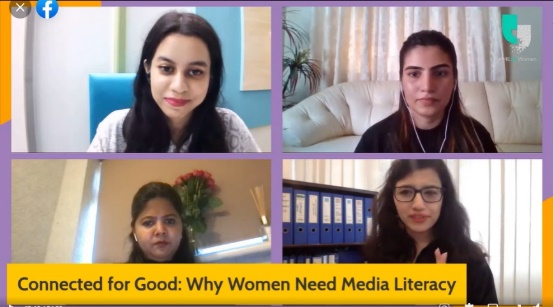
Connected for Goods: Why Women Need Media Literacy
On the occasion of the International Day of the Girl Child, GNMI hosted a webinar to discuss how various communities of women, including minorities, migrants, and the disabled, can benefit from technology and the internet. Abia Akram, a disability rights activist, shared her working experiences to empower disabled girls in rural Pakistan with digital skills. She discussed the challenges she faces, such as acquiring accessible technology and software for these girls, highlighting the critical need for more inclusive technological resources.
Elaine Alam, who works with migrant women and those from minority faiths, spoke about the social and economic empowerment of these women through technology and the Internet. She emphasized how these tools can help bring marginalized women into the mainstream, despite the struggles against patriarchal mindsets and norms that she faces in pushing for their financial independence. Kinza Momin, a data scientist, talked about the need for early STEM education for young girls, so the field can see a bigger female representation, and shared her own experiences of working in a male-dominant industry in Pakistan.
Podcasts
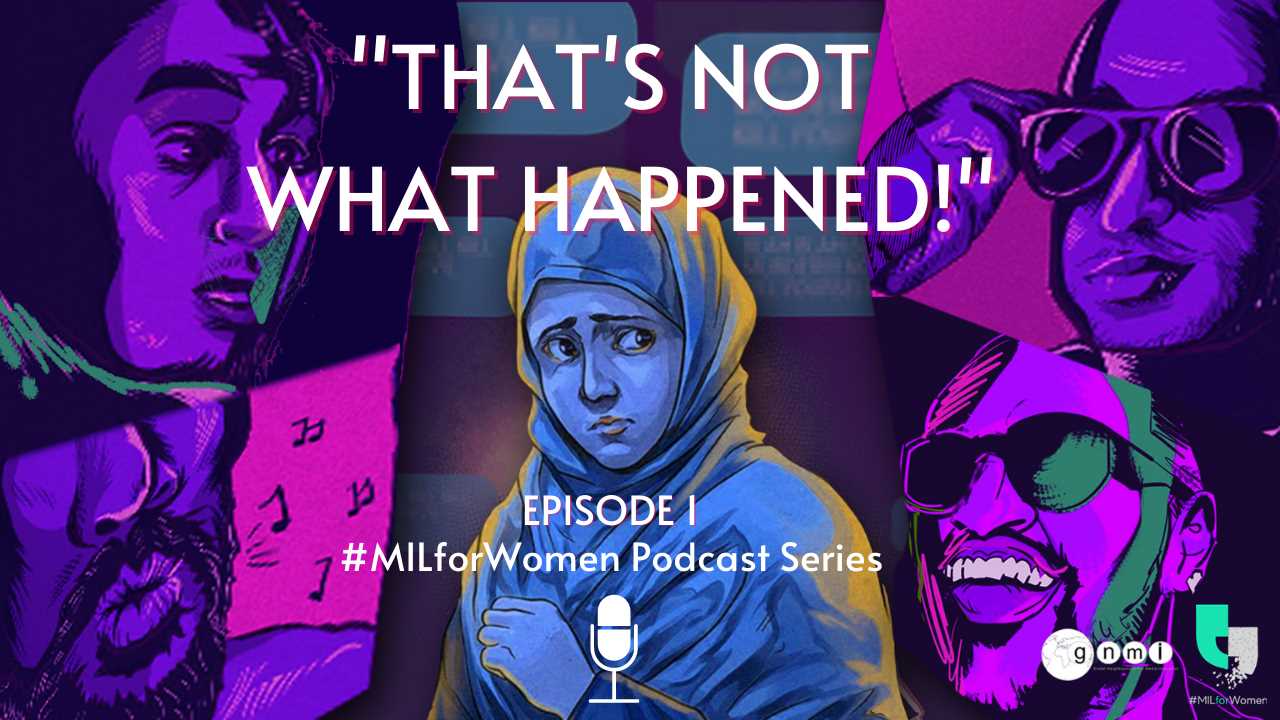
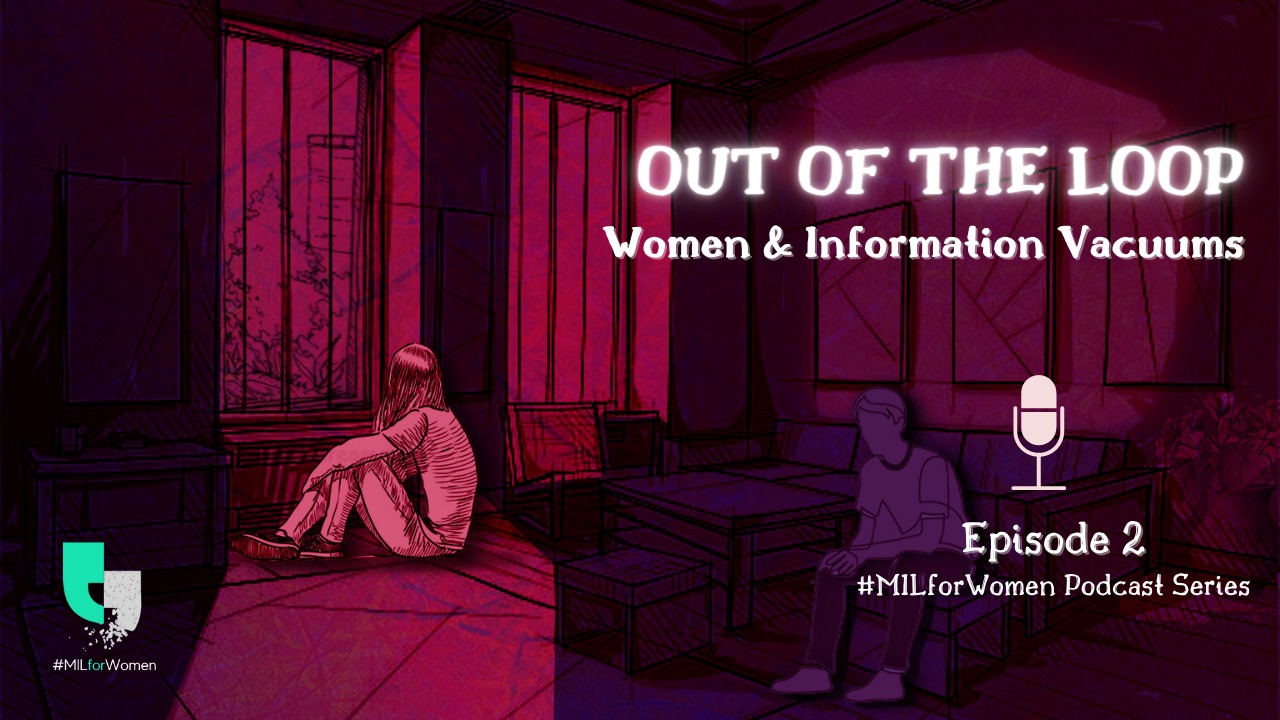
A series of four podcasts were released on the GNMI’s official social media platforms discussing the need of safe cyber spaces for women in Pakistan and media literacy for women who use internet for their information needs. The aim of this podcast series was to provide listeners with an insight into challenges faced by certain communities in connecting digitally, its repercussions, and growing misogynistic toxicity on social media.
Twitter Spaces
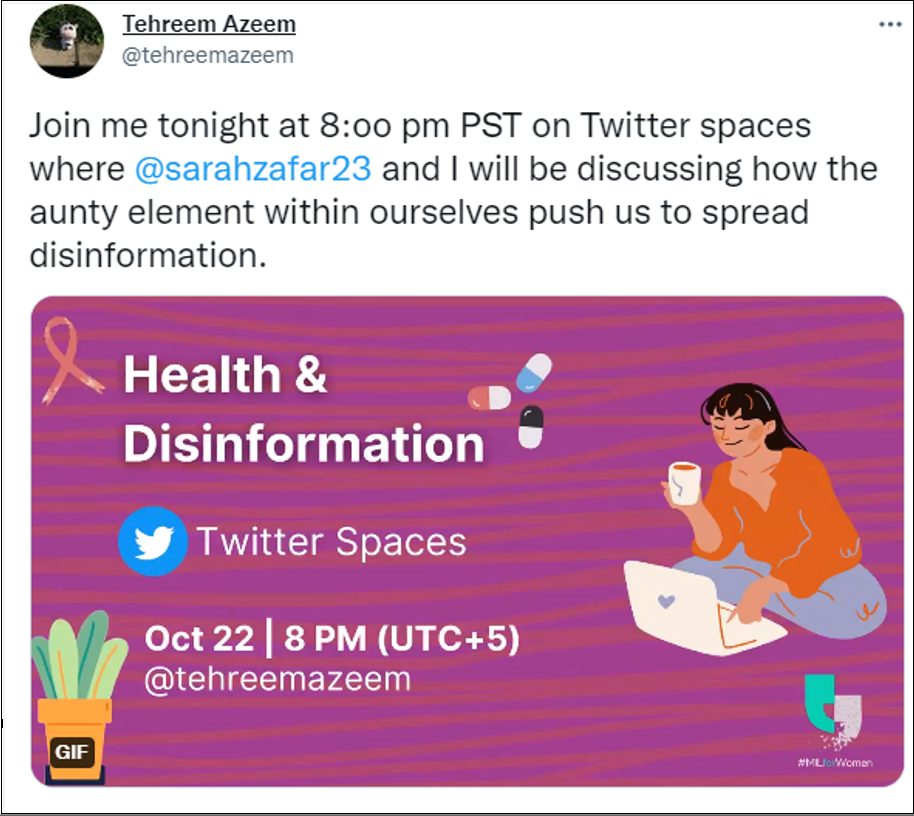
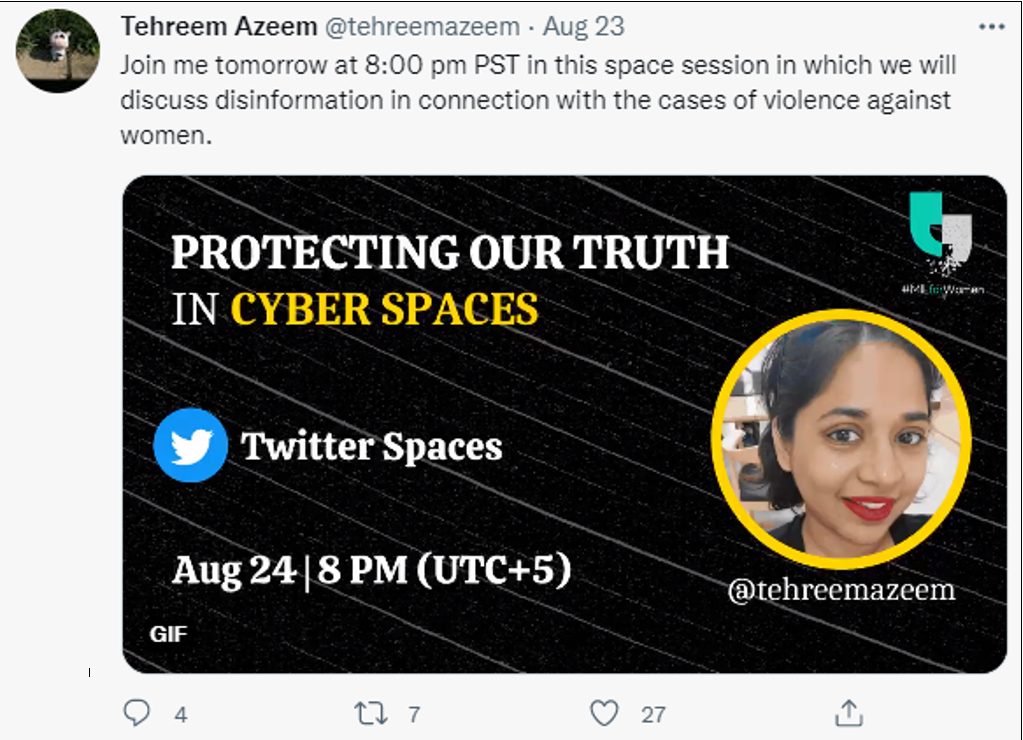
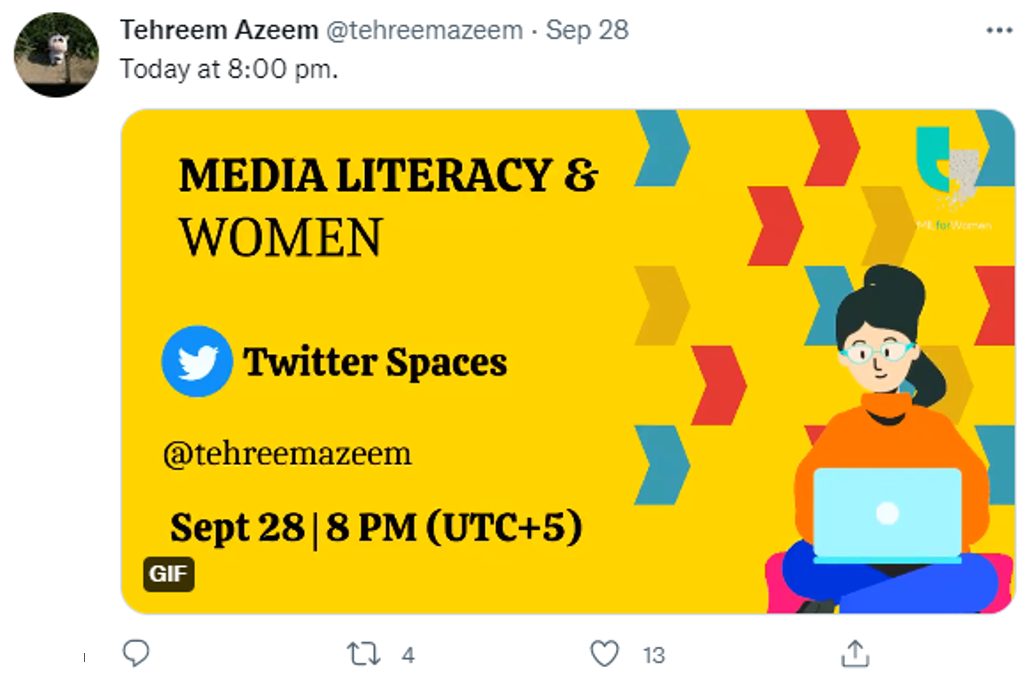
Three Twitter Spaces were also conducted with media representatives, gender researchers, health practitioners, and digital content creators to discuss health & disinformation, women’s media literacy, etc. These discussions provided a platform for sharing insights and strategies to counter online disinformation. Each session focused on the challenges faced by women in navigating digital spaces, emphasizing the importance of media literacy in empowering women to critically evaluate online content.