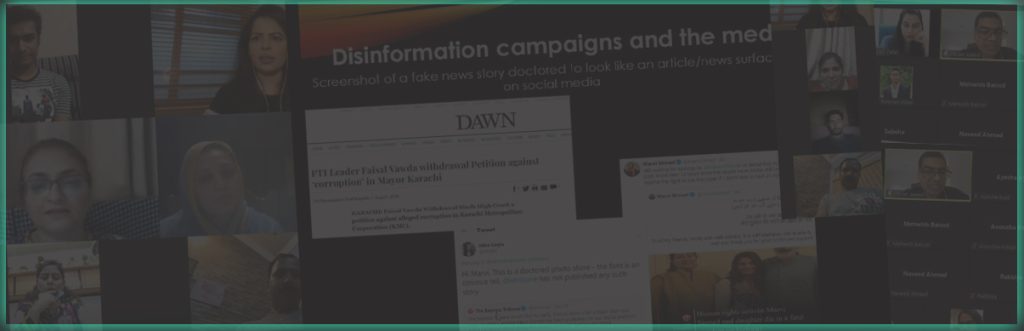
In response to the growing challenge of disinformation during the Covid-19 pandemic, online training session were conducted specifically designed for journalists battling false information in newsrooms and in the field. This session was facilitated by two esteemed trainers, Najia Ashar and Lubna Jarar Naqvi. Najia Ashar provided a comprehensive overview of the information disorder that journalists encounter across various media platforms, including electronic, print, and digital. Her segment focused on the different forms of disinformation and fake news, emphasizing the importance of recognizing and identifying these issues. She equipped participants with practical tools and strategies to counter disinformation effectively, empowering journalists to maintain the integrity of their reporting.
Lubna Jarar Naqvi, a senior journalist, delivered an insightful presentation on the dynamics of misinformation, illustrating how it spreads both from the top-down and bottom-up. She shared valuable resources and authentic sources that journalists can use to verify information and debunk myths or conspiracy theories.


In the second year of our project, we conducted another insightful online training session titled “Tackling Digital Misogyny” focused on fact-checking, featuring Rizwan Saeed and guest speaker Niha Dagia. Rizwan Saeed, a social science researcher and development consultant, shared his expertise on social psychology, social media, the digital gender divide, toxic masculinity, and misogyny on Twitter. He provided participants with a foundational understanding of social psychology and its influence on the behavior of male and female internet users. Using the Aurat March in Pakistan as a case study, Saeed explained how masculinity is portrayed and displayed online. He also introduced various tools for digital research, equipping participants with essential skills for effective fact-checking.
Guest Speaker Niha Dagia, a multimedia journalist, provided participants with a closer look at how gender-based violence plays out in online spaces and discussed the recent uptick in cases of online abuse and harassment following the pandemic, and the impunity to be misogynistic as shown from the discussions on social media following gender-based violence cases in Pakistan.


